

Church Autonomy Doctrine and Associational Standing Collide in Nonprofit Governance Dispute
Read the Court's Opinion (PDF)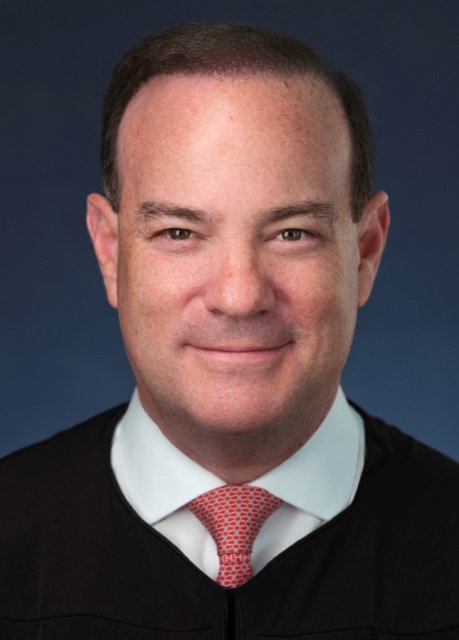 Judge Grant Dorfman
In Jeremiah Counsel Corp. v. Young, the Texas Business Court's Eleventh Division confronted whether an incorporated association of church members has standing to challenge amendments eliminating congregational voting rights, and whether the First Amendment's church autonomy doctrine bars judicial review of those governance changes. Judge Dorfman's opinion navigates the boundary between constitutional religious autonomy and statutory obligations under the Texas Business Organizations Code for a 94,000-member nonprofit church corporation.
Court Staff Summary
This opinion addresses (i) the boundary between a church’s right to autonomy and its secular obligations as a nonprofit corporation; (ii) an association’s standing to bring claims for declaratory relief and derivative claims under the Texas Business Organizations Code; (iii) the merits of cross-motions for summary judgment that challenge actions to amend governing documents, as well as the actions that followed the amendments; and (iv) the statutory jurisdiction of the Texas Business Court over claims against the church’s former outside counsel.
Background: A Megachurch Governance Overhaul
Second Baptist Church of Houston, a nearly century-old Texas nonprofit corporation with approximately 94,000 members, operated under a representative governance structure that vested significant voting rights in individual members—including the right to elect the Senior Pastor and Board of Trustees and approve material bylaw changes. In May 2023, the Church's leadership initiated a process to fundamentally restructure that governance model. On May 31, 2023, following limited notice via email newsletters and oral announcements at weekend services, the Church held a business meeting at which members voted 315-2 to adopt amended articles of incorporation and new bylaws. These 2023 amendments abolished all member voting rights, transitioned governance from a Board of Trustees to a self-perpetuating "Ministry Leadership Team" (MLT), and eliminated the congregation's historic oversight role.
Plaintiff Jeremiah Counsel Corporation—an incorporated association of disaffected Church members created specifically to bring this lawsuit—filed suit challenging the validity of the 2023 vote and seeking declaratory relief and derivative claims under the Texas Business Organizations Code. The defendants include former Senior Pastor Ed Young (who led the Church from 1978 to 2024), his son Ben Young (current Senior Pastor), Associate Pastor Lee Maxcy, the Church's outside counsel Dennis Brewer, and the Church itself.
The Jurisdictional Thicket: Church Autonomy and Associational Standing
Judge Dorfman's opinion identifies two threshold jurisdictional issues that must be resolved before reaching the merits of cross-motions for summary judgment. First, the court must determine "the boundary between a church's constitutional right to self-governance and its statutory obligations as a Texas nonprofit corporation." Defendants invoked the First Amendment's church autonomy doctrine, arguing that nearly all of Plaintiff's claims are barred because they concern "matters of faith and internal church governance." As Judge Dorfman frames it:
The United States and Texas Constitutions, and Texas case law applying them, task secular courts in such situations with a solemn duty: to decide legal matters when appropriate, but to abjure the exercise of jurisdiction when it risks intrusion into the religious sphere.
The second jurisdictional barrier involves standing. Defendants contend that JCC—"an incorporated association of disaffected Church members created solely to bring this lawsuit"—lacks associational standing to pursue claims on behalf of its members. More fundamentally, defendants argue that even if associational standing exists, JCC cannot "stack" derivative standing atop associational standing to pursue claims that belong to the nonprofit Church itself and must be brought derivatively by a member under the TBOC.
The Merits Question and Statutory Jurisdiction Over Counsel
Beyond these jurisdictional thresholds, the opinion addresses the core merits issue: whether defendants validly amended the Church's governing documents to eliminate members' historic voting rights for Senior Pastor and Board selection. Judge Dorfman characterizes this as "relatively straightforward" compared to the jurisdictional complexities: "Did Defendants validly amend the Church's governing documents to remove the members' historic right to vote for the Senior Pastor and Board members of their choice?" The opinion also tackles a fourth issue—whether the Texas Business Court has statutory jurisdiction over claims against the Church's former outside counsel, defendant Brewer, who moved separately for summary judgment on additional grounds.
Significance for Texas Commercial Practice
This case represents a significant test of the Business Court's approach to nonprofit corporate governance disputes that implicate constitutional concerns. The opinion's treatment of associational standing—particularly whether an incorporated association can assert derivative claims on behalf of an underlying entity—may have implications beyond the religious nonprofit context for member disputes in other unincorporated associations, professional organizations, and membership-based entities. The court's navigation of the church autonomy doctrine also clarifies when Texas courts will exercise jurisdiction over corporate governance mechanics of religious nonprofits despite First Amendment concerns. For practitioners advising nonprofit clients, the case underscores the tension between statutory compliance under the TBOC and constitutional protections for religious organizations, and may provide guidance on notice requirements and procedural validity for fundamental governance changes affecting member rights.