

We can't find the internet
Attempting to reconnect
Something went wrong!
Attempting to reconnect
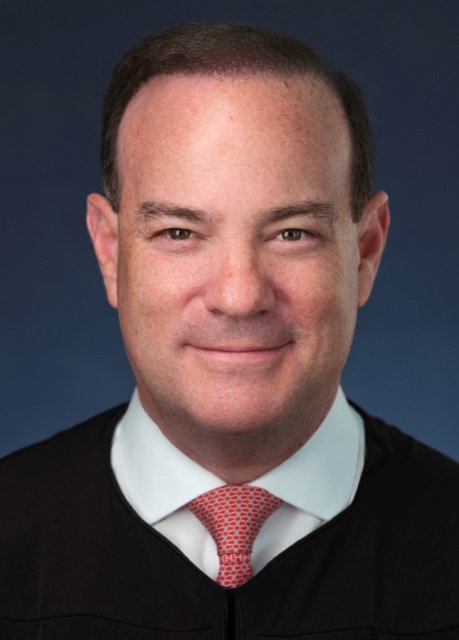
Hon. Grant Dorfman
Judge · Seat 11B
Texas Business Court · Eleventh Business Court Division (Houston)
Biography
Governor Abbott appointed Grant Dorfman to the new Eleventh Business Court Division in Houston effective September 1, 2024, and his colleagues elected him to serve as the Administrative Presiding Judge for the initial two-year term of the Court. Judge Dorfman previously presided over the 129th and 334th Civil District Courts in Harris County. In addition to his judicial service, Judge Dorfman worked as Senior In-House Counsel in charge of litigation for Nabors Industries, an oil and gas drilling contractor; as an Of Counsel attorney with Sheehy, Ware & Pappas; a mediator and arbitrator, and state court visiting judge; and, most recently, as the Deputy First Assistant to the Texas Attorney General. A native Texan, Judge Dorfman graduated from Brown University with an A.B. in Honors History magna cum laude and was admitted to Phi Beta Kappa. He also obtained a Master of Studies (M.St.) in History and Political Philosophy from Oxford University and a J.D. from the Yale Law School. He served as a law clerk to the Honorable Jerry E. Smith of the United States Fifth Circuit Court of Appeals and, prior to taking the bench, practiced commercial litigation for ten years with two Houston law firms: Susman Godfrey and Ogden, Gibson, White & Broocks.
Opinions by Judge Dorfman (5)
Church Autonomy Doctrine and Associational Standing Collide in Nonprofit Governance Dispute
In Jeremiah Counsel Corp. v. Young, the Texas Business Court's Eleventh Division confronted whether an incorporated association of church members has standing to challenge amendments eliminating congregational voting rights, and whether the First Amendment's church autonomy doctrine bars judicial review of those governance changes. Judge Dorfman's opinion navigates the boundary between constitutional religious autonomy and statutory obligations under the Texas Business Organizations Code for a 94,000-member nonprofit church corporation.
Business Court Rejects 'Springing' Qualified Transaction Theory in Master Service Agreement Remand
In Clean-Co Systems v. Enterprise Products Operating, the Business Court's Eleventh Division remanded a dispute over a $688,000 invoice, rejecting the defendant's argument that a 2003 master service agreement became a qualified transaction once cumulative payments exceeded $5 million. The court held that an umbrella agreement involving no consideration at execution could not retroactively satisfy the qualified transaction threshold based on subsequent, unrelated purchase orders spanning over two decades.
Perpetual Royalty Agreement Satisfies Qualified Transaction and Amount-in-Controversy Requirements for Business Court Jurisdiction
In Yaun v. Battle & Sands Energy Corp., Judge Dorfman denied a motion to remand, holding that a perpetual royalty agreement on frac sand sales constitutes a qualified transaction under Section 25A.004(d)(1) where the plaintiff may be "entitled to receive" consideration exceeding $5 million, and that HB 40's reduced jurisdictional thresholds apply retroactively to actions commenced on or after September 1, 2024. The court applied the C Ten burden-shifting framework and found the removing defendants' pleadings—combined with plaintiff's own evidence projecting $6.4 million in royalties over three years of a perpetual agreement—established at least the plausibility that damages exceed the jurisdictional minimum.
Mandatory Real Property Venue Trumps Forum-Selection Clause in Wastewater Disposal Dispute
In NGL Water Solutions Permian v. Lime Rock Resources V-A, the Business Court granted transfer to Loving County under Section 15.011's mandatory venue provision for actions to recover damages to real property, finding that the dispute's essence concerned alleged wastewater migration damage to oil and gas wells and mineral interests located in Loving County. The court held that the mandatory real property venue statute prevailed over NGL's reliance on a Harris County forum-selection clause in the parties' Shut In Agreement.
Section 8 of House Bill 19 Bars Non-Consensual Removal of Pre-September 1, 2024 Cases to Business Court
In XTO Energy Inc. v. Houston Pipe Line Company LP, the Business Court of Texas granted plaintiff's motion to remand a 2021 case that defendants removed in October 2024, holding it lacked subject-matter jurisdiction over cases filed before September 1, 2024. The decision turns on interpreting Section 8 of House Bill 19, which provides that "the changes in law made by this Act apply to civil actions commenced on or after September 1, 2024."