

Rule 91a Dismissal Standards Applied to Veil Piercing and Individual Liability Claims in Acquisition Dispute
Read the Court's Opinion (PDF)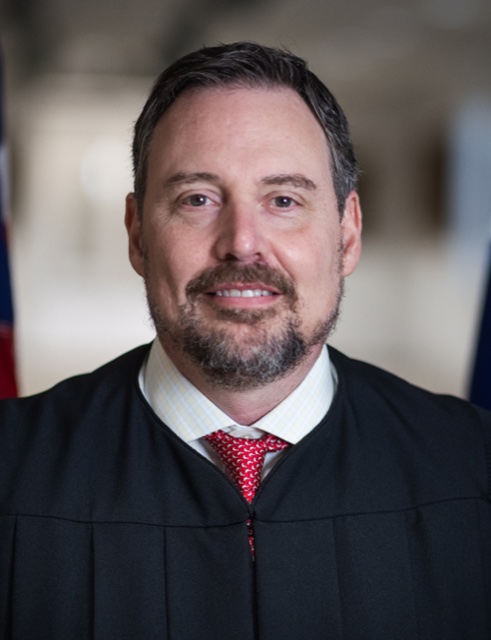 Judge Brian Stagner
In Lensabl, Inc. v. RBH SPE One, LLC, the Texas Business Court's Eighth Division granted in part and denied in part a Rule 91a motion to dismiss, holding that fraud claims against an individual principal were adequately pleaded but dismissing breach-of-contract and veil-piercing claims for failure to state legally cognizable claims. The November 5, 2025 memorandum opinion addresses the pleading standards required to survive dismissal in a dispute arising from a $28.9 million acquisition agreement.
Court Staff Summary
Granting in part and denying in part Defendants' motion to dismiss under Rule 91a because the pleadings fail to state a legally cognizable claim for breach of contract or for veil piercing, and the fraud claim is adequately pleaded.
The Texas Business Court's Eighth Division issued a ruling on Rule 91a dismissal standards in Lensabl, Inc. v. RBH SPE One, LLC, a case arising from a disputed $28.9 million acquisition agreement. The court's November 5, 2025 memorandum opinion granted in part and denied in part the Byrnes Defendants' motion to dismiss, addressing the pleading requirements for contract, fraud, and veil-piercing claims.
Background and Business Context
Lensabl, a web-based eyewear company, entered into a transaction agreement with RBH SPE One, LLC and Robert Byrnes Holdings, LLC under which the purchasing entities would acquire a 49% interest in Lensabl for $28,990,000, with an option to purchase a majority stake within twelve months. In 2023, Robert Byrnes, Jr. began exploring the possible acquisition and engaged Ramon Coscolluela to negotiate on behalf of the two purchasing entities.
During negotiations, Lensabl alleges that Coscolluela—acting as Mr. Byrnes's agent—assured Lensabl that Mr. Byrnes and the Purchasing Parties had ample financial resources to complete the transaction. These assurances, Lensabl contends, were central to its decision to move forward with the deal.
The transaction agreement included Section 5.14, which required RBH SPE to be adequately funded at each closing and made clear that the transaction was not conditioned on obtaining financing. RBH, as guarantor, "unconditionally and irrevocably guarantee[d]" all obligations of RBH SPE and represented that it possessed "the financial capacity to pay and perform its obligations." The agreement contemplated several closings, with the first scheduled for September 22, 2023.
The Rule 91a Motion
The Byrnes Defendants—Robert Byrnes, Jr., Lainie K. Byrnes, R. Jeff Byrnes, III, Mysti B. Byrnes, and Sarah Byrnes—filed a motion to dismiss on September 22, 2025 under Texas Rule of Civil Procedure 91a. The motion challenged two causes of action (fraud and breach of contract) and one theory of derivative liability (piercing the corporate veil). Lensabl filed its response on October 16, 2025, and the court heard oral argument on October 23, 2025.
The Court's Ruling
The court concluded that the motion should be granted in part and denied in part. The court found that the pleadings failed to state a legally cognizable claim for breach of contract against Mr. Byrnes or for veil piercing against the Byrnes Defendants, and dismissed those claims. However, the fraud claim against Mr. Byrnes was found to be adequately pleaded and will proceed.
The memorandum opinion demonstrates the court's application of Rule 91a standards to distinguish between claims that provide sufficient factual basis to proceed and those that fail to state legally cognizable claims, particularly in the context of individual liability for corporate obligations.