

We can't find the internet
Attempting to reconnect
Something went wrong!
Attempting to reconnect
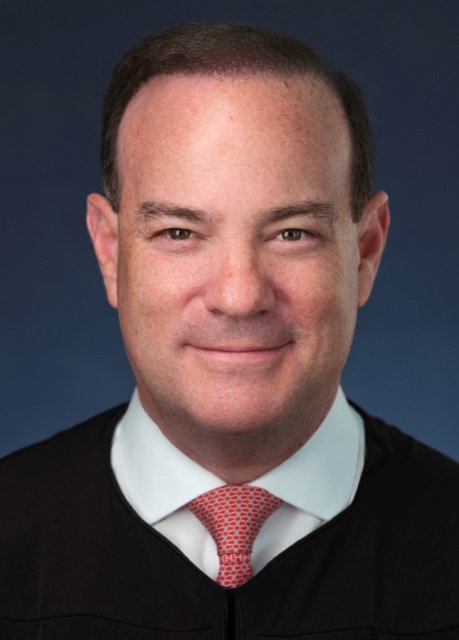
Hon. Grant Dorfman
Judge · Seat 11B
Texas Business Court · Eleventh Business Court Division (Houston)
Biography
Governor Abbott appointed Grant Dorfman to the new Eleventh Business Court Division in Houston effective September 1, 2024, and his colleagues elected him to serve as the Administrative Presiding Judge for the initial two-year term of the Court. Judge Dorfman previously presided over the 129th and 334th Civil District Courts in Harris County. In addition to his judicial service, Judge Dorfman worked as Senior In-House Counsel in charge of litigation for Nabors Industries, an oil and gas drilling contractor; as an Of Counsel attorney with Sheehy, Ware & Pappas; a mediator and arbitrator, and state court visiting judge; and, most recently, as the Deputy First Assistant to the Texas Attorney General. A native Texan, Judge Dorfman graduated from Brown University with an A.B. in Honors History magna cum laude and was admitted to Phi Beta Kappa. He also obtained a Master of Studies (M.St.) in History and Political Philosophy from Oxford University and a J.D. from the Yale Law School. He served as a law clerk to the Honorable Jerry E. Smith of the United States Fifth Circuit Court of Appeals and, prior to taking the bench, practiced commercial litigation for ten years with two Houston law firms: Susman Godfrey and Ogden, Gibson, White & Broocks.
Opinions by Judge Dorfman (1)
Perpetual Royalty Agreement Satisfies Qualified Transaction and Amount-in-Controversy Requirements for Business Court Jurisdiction
In Yaun v. Battle & Sands Energy Corp., Judge Dorfman denied a motion to remand, holding that a perpetual royalty agreement on frac sand sales constitutes a qualified transaction under Section 25A.004(d)(1) where the plaintiff may be "entitled to receive" consideration exceeding $5 million, and that HB 40's reduced jurisdictional thresholds apply retroactively to actions commenced on or after September 1, 2024. The court applied the C Ten burden-shifting framework and found the removing defendants' pleadings—combined with plaintiff's own evidence projecting $6.4 million in royalties over three years of a perpetual agreement—established at least the plausibility that damages exceed the jurisdictional minimum.