

Work Product Doctrine Does Not Protect Non-Lawyer Notes Lacking Attorney Mental Impressions
Read the Court's Opinion (PDF)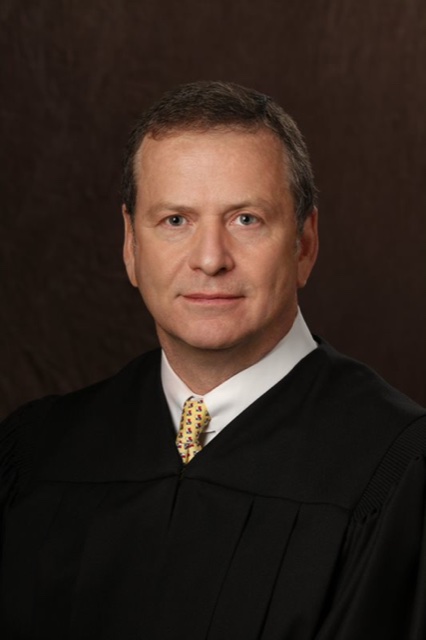 Judge Bill Whitehill
In Synergy Thermogen v. Blackbrush Oil & Gas, the Business Court held that notes of a telephone call between plaintiff's former employee and defendant's non-lawyer representatives are neither core nor protected noncore work product where they contain only factual summaries without attorney mental impressions and the requesting party demonstrated substantial need and undue hardship. The decision clarifies that even when an attorney directs a non-representative to take notes, the work product doctrine does not shield purely factual recitations from discovery.
Court Staff Summary
Notes of a telephone call between the plaintiff's former employee and a defendant’s non-lawyer representatives are neither core work product nor protected noncore work product because (i) they do not contain mental processes from an attorney or attorney’s representative and (ii) plaintiffs have shown (a) a sufficient need for the notes and (b) it would be an undue burden to obtain the information by other means.
Background: Clean Energy Technology Dispute
Synergy Thermogen, Inc. and Synergy Automation LLC, early-stage clean energy technology developers, sued Blackbrush Oil & Gas, L.P. and related entities over alleged breaches of contract and fiduciary duties arising from agreements to deploy and test Synergy's waste-to-energy technology. The case reached the Business Court under its jurisdiction over fiduciary breach claims by owners or controlling persons arising from qualified transactions. The discovery dispute arose after Todd Walker, a former Synergy employee, initiated contact with Blackbrush representatives in October 2025 to discuss his concerns about the lawsuit. At the direction of NC Investors' counsel Joel Kanvik, non-lawyer representative John Ward took notes during a subsequent November 20, 2025 telephone call between Walker and three NC Investors representatives (Mezey, Martin, and Ward). Synergy learned of the notes during a February 2026 deposition and sought their production.
The Core Work Product Question
Judge Whitehill framed the pivotal issue as "whether the notes are protected work product," requiring analysis under both the core and noncore work product frameworks. NC Investors argued the notes constituted core work product because attorney Kanvik directed Ward to take them for purposes of providing legal advice. The court rejected this argument, holding that core work product protection requires the material to "contain the mental impressions, conclusions, opinions, or legal theories of an attorney or attorney's representative." Critically, the court found that none of the call participants qualified as Kanvik's "representative" under Texas Rule of Evidence 503(a)(4), which limits that term to persons "employed by the lawyer to assist in the rendition of professional legal services" or accountants reasonably necessary for such services.
Factual Summaries Versus Mental Impressions
After conducting an in camera review, Judge Whitehill determined the notes were "only a factual summary of the issues discussed during the phone call and lack mental impressions, opinions, conclusions, or legal strategies." The court analogized them to "traditional board meeting minutes" and distinguished them from protected materials containing attorney mental processes. As the court explained:
The primary purpose of the work product rule is to shelter the mental processes, conclusions, and legal theories of the attorney, providing a privileged area within which the lawyer can analyze and prepare his or her case.The opinion cited Nat'l Union Fire Ins. Co. of Pittsburgh, Pa. v. Valdez for the proposition that attorney files not revealing mental processes are not core work product, and Mayes v. Simpson, where a recorded statement lacking mental impressions was held to be ordinary, not opinion, work product.
The Noncore Work Product Analysis
Having determined the notes were not core work product, the court turned to whether they constituted protected noncore work product. Under Texas Rule of Civil Procedure 192.5(b)(2), noncore work product is discoverable upon a showing of "substantial need for the materials" and inability "to obtain their substantial equivalent without undue hardship." The court concluded that Synergy satisfied both prongs: the plaintiffs demonstrated sufficient need for the notes and established it would be an undue burden to obtain the information by other means. The court ordered production under an Attorneys' Eyes Only designation pursuant to the parties' agreed protective order, balancing the discoverability with confidentiality protections.
Significance for Texas Commercial Practice
This memorandum opinion provides important guidance on the boundaries of work product protection in the Business Court. The decision reinforces that the work product doctrine's core protection extends only to attorney or attorney-representative mental impressions, not to factual information gathered at attorney direction by non-representatives. Practitioners should note that simply having counsel direct a business person to document a conversation does not cloak those notes in work product protection if they contain only factual recitations. The opinion also demonstrates the Business Court's willingness to conduct in camera review to parse factual summaries from protected mental impressions, and its application of the substantial need and undue hardship standards for noncore work product. For litigants, the case underscores that witness interview notes taken by non-lawyer business representatives—even when directed by counsel—face significant discoverability risks absent clear evidence of attorney mental processes embedded in the documentation.