

Contract Construction and Location Commitments: Business Court Interprets Four Interrelated Agreements to Determine Redemption Rights in Arena Partnership Dispute
Read the Court's Opinion (PDF)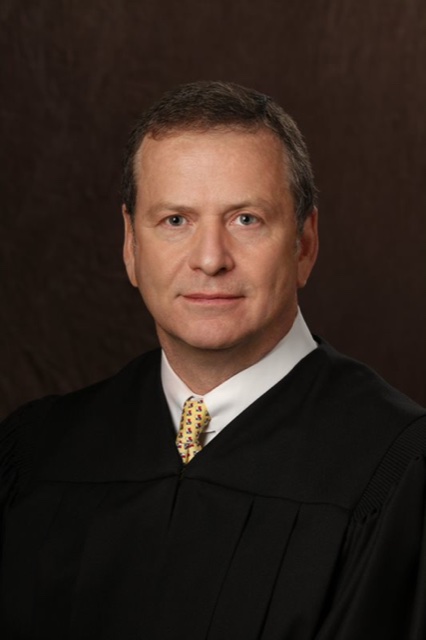 Judge Bill Whitehill
In Dallas Sports Group v. DSE Hockey Club, the Business Court granted summary judgment to the Mavericks, holding that the "Location Commitments" in franchise agreements required the Stars to maintain their Team's principal corporate and executive offices in Dallas—not merely the Owner's offices—and that the Stars' relocation to Frisco constituted a breach triggering redemption rights for $110. The court applied traditional contract construction principles to four separate but related agreements executed over a one-year period, rejecting the Stars' argument that their conduct had waived enforcement of the redemption provisions.
Court Staff Summary
This opinion discusses contract construction principles applied to four separate but related contracts among three parties, executed over a one-year period. It also concerns the inconsistent conduct requirement for implied waiver by conduct necessary to overcome a contractual nonwaiver by conduct clause.
Background: Co-Ownership of the American Airlines Center
The Dallas Mavericks and Dallas Stars organizations each hold fifty-percent ownership interests in Center Operating Company, L.P. (COC), a limited partnership that operates the American Airlines Center under a lease with the City of Dallas expiring in 2031. They also co-own the partnership's general partner, Center GP, LLC. The arrangement originated in 1998 when each organization executed separate franchise agreements with Dallas containing "Location Commitments." Approximately a year later, the parties executed the COC partnership agreement and Center GP company agreement, both containing "Relocation Events" clauses that permit redemption of a relocating party's interests for $100 (partnership) and $10 (general partner membership) if a party breaches its Location Commitment before 2031.
The Dispute: Interpreting "Owner" and "Team" in Location Commitments
The Mavericks contended that the Stars became a "Relocation Partner/Member" no later than 2003 when they moved their administrative offices and practice facilities to Frisco, Texas. On October 25, 2024, the Mavericks' counsel delivered a redemption letter to the Stars and tendered $110 in cash. The Stars rejected the redemption six days later and counterclaimed that the Mavericks themselves had become a Relocation Partner when Dallas Basketball Limited identified a Las Vegas address as its principal office on a November 2024 Texas Franchise Tax Public Information Report, and when Dallas Sports Group, LLC's March 2025 Texas registration identified Las Vegas addresses for its principal office and governing person. The parties filed seven summary judgment motions presenting what Judge Whitehill characterized as disputes about "the proper application of existing law to undisputed facts."
The Court's Analysis: Defined Terms Control
Judge Whitehill distilled the case to "this pivotal issue: whether the parties' 'Location Commitments' require that the 'Teams'' principal, public-facing presence be in Dallas, Texas?" The court emphasized that "'Owner' and 'Team' are defined terms, they mean different things, and the court must use those different meanings when analyzing the parties' arguments." Applying contract construction principles, the court held:
the Location Commitments have only one reasonable meaning: "Owners" are required to designate and maintain in Dallas the principal corporate and executive offices of their respective "Team," rather than the "Owner's" own such offices.
The court found that "the evidence conclusively establishes that at all relevant times the Mavericks have complied with this requirement—and the Stars have not." The opinion does not detail the court's analysis of the Stars' nonwaiver-by-conduct defense, but the staff description indicates the court addressed "the inconsistent conduct requirement for implied waiver by conduct necessary to overcome a contractual nonwaiver by conduct clause."
Significance for Texas Commercial Practice
This opinion demonstrates the Business Court's rigorous application of traditional contract construction principles to complex, multi-party commercial arrangements. The court's emphasis on giving effect to defined terms—even when parties colloquially refer to themselves differently—reinforces that sophisticated parties will be held to the precise language they negotiated. The decision also illustrates how redemption provisions in partnership and LLC agreements will be enforced according to their terms when triggering events occur, even where the redemption price is nominal. Practitioners drafting location-based covenants in partnership agreements should note the court's distinction between requirements applicable to the "Owner" entity versus the "Team" or operating business, particularly where ownership structures involve multiple tiers. The court granted the Mavericks' declaratory judgment and affirmative defenses motions while denying all Stars' motions, though it reserved determination on the Mavericks' tortious interference claim and whether the holdings apply to Dallas Sports & Entertainment, L.P., which was added as a party after the motions were filed.