

Personal Jurisdiction Requires More Than Investment in Texas-Based Company: Business Court Grants Special Appearance
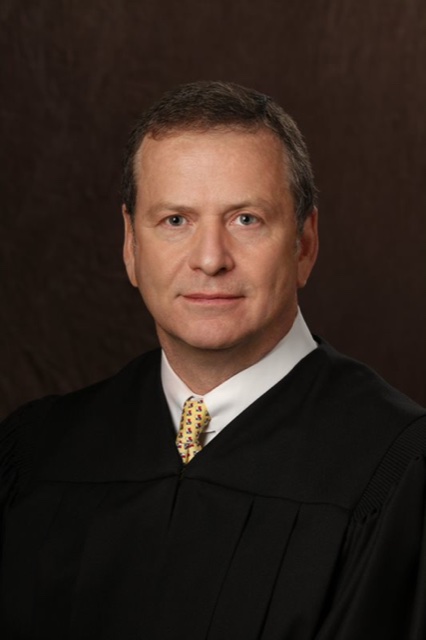 Judge Bill Whitehill
Decided August 19, 2025
Mem. Op.
Jurisdiction & Remand
Judge Bill Whitehill
Decided August 19, 2025
Mem. Op.
Jurisdiction & Remand
In Riverside Strategic Capital Fund I v. CLG Investments, 2025 Tex. Bus. 33, Judge Whitehill granted a special appearance by nineteen out-of-state defendants, holding that plaintiffs failed to establish minimum contacts where defendants invested in a Delaware entity governed by Delaware law and made no purposeful contacts with Texas. The court rejected arguments that knowledge of the company's Texas operations, designation of a Texas-based agent, or participation in prior Texas litigation established specific jurisdiction over passive investors.
Court Staff Summary
Granting a special appearance due to no minimum contacts in Texas.
Background: A $50 Million Investment Gone Wrong
Riverside Strategic Capital Fund I and related entities sued over thirty defendants in Dallas County, alleging fraud in connection with a $50 million investment in True Health Group LLC (THG) made in 2017. Riverside claimed it was defrauded through misrepresentations in a Securities Purchase Agreement (SPA) concerning THG's compliance with healthcare laws, ultimately losing more than $84 million when THG entered bankruptcy. A subset of defendants removed the case to the Business Court, and nineteen out-of-state defendants (the "OSDs")—individual investors and investment entities—filed special appearances challenging personal jurisdiction.
The Jurisdictional Dispute
Riverside's petition contained only boilerplate jurisdictional allegations, asserting that defendants "engaged in business in Texas" under the long-arm statute. In response to the special appearances, Riverside advanced five theories: (i) the OSDs knowingly invested in an entity with substantial Texas business activities; (ii) they designated CLG Investments, LLC, a Frisco-based entity, as their agent under the SPA; (iii) they consented to jurisdiction by signing THG's 2017 LLC Agreement; (iv) they waived objections by appearing in prior Texas litigation; and (v) four OSDs had additional Texas contacts through work with THG. Each OSD submitted declarations establishing they were not Texas citizens, did not reside in Texas when signing the SPA, and made their investments from their home states.
The Court's Analysis: Passive Investment Insufficient for Jurisdiction
Judge Whitehill granted the special appearance, holding that plaintiffs failed to satisfy both the pleading requirements of Kelly v. General Interior Construction, Inc. and the substantive minimum contacts analysis. The court emphasized a critical distinction:
Further, this action arises from plaintiffs' investment in the company (and alleged misrepresentations in the investment agreement), not defendants' investment. Plaintiffs' investment agreement was with a Delaware entity, was governed by Delaware law, and did not require any party to perform any act in Texas.
The court rejected the argument that investing in a company with Texas operations establishes jurisdiction, noting that
it is not enough that defendants invested in a company that may have been headquartered in Texas and that plaintiffs' claims are premised on allegations that the company violated healthcare laws in Texas (and elsewhere) where no alleged fraudulent misrepresentation occurred in, was purposefully directed at, or was communicated to individuals in Texas.The court characterized any Texas connection as "fortuitous" because THG operated beyond Texas and the alleged misrepresentations in the investment agreement had no Texas nexus.
Practical Significance for Texas Commercial Practice
This decision provides important guidance on personal jurisdiction in multi-party investment disputes. The Business Court made clear that passive investment in an entity with Texas operations—even with knowledge of those operations—does not establish the purposeful availment required for specific jurisdiction. The holding protects out-of-state investors from being haled into Texas courts based solely on their portfolio company's activities, particularly where the investment documents are governed by another state's law and contain no Texas performance obligations. The decision also reinforces Kelly's pleading requirements, signaling that boilerplate jurisdictional allegations will not survive special appearances in the Business Court. For plaintiffs, the opinion underscores the need to plead specific facts showing each defendant's purposeful contacts with Texas that gave rise to the claims—a showing that cannot be satisfied by the company's contacts alone or by agency theories unsupported by evidence of the agent's authority to bind defendants to Texas jurisdiction.