

Personal Jurisdiction Requires Purposeful Forum Contacts Attributable to the Specific Defendant, Not Group Pleading
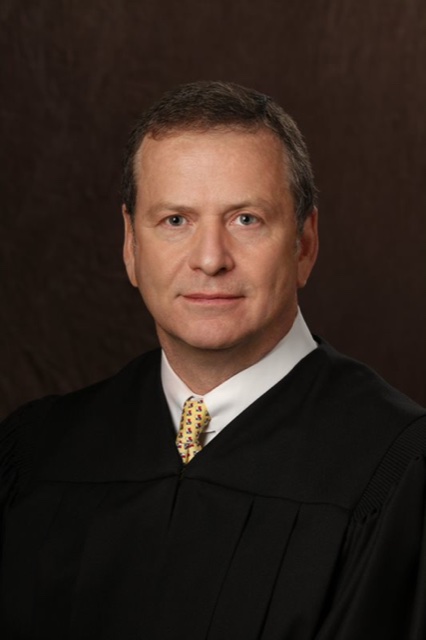 Judge Bill Whitehill
Decided July 16, 2025
Mem. Op.
Jurisdiction & Remand
Judge Bill Whitehill
Decided July 16, 2025
Mem. Op.
Jurisdiction & Remand
In Primexx Energy Opportunity Fund v. Primexx Energy Corporation, the Business Court granted special appearances by Angelo Acconcia and Blackstone Inc., holding that plaintiffs failed to establish that claims arose from Acconcia's purposeful contacts with Texas and that his forum contacts were attributable to a different entity, not Blackstone Inc. The court rejected group pleading and required individualized jurisdictional analysis for each defendant, dismissing claims against both defendants for lack of specific personal jurisdiction.
Court Staff Summary
Granting a special appearance arguing no purposeful contacts in Texas.
The Business Court's memorandum opinion in Primexx Energy Opportunity Fund v. Primexx Energy Corporation provides important guidance on personal jurisdiction standards in complex commercial disputes involving multiple affiliated entities. Judge Whitehill granted special appearances filed by Angelo Acconcia, a Senior Managing Director of Blackstone Inc., and Blackstone Inc. itself, concluding the court lacked specific personal jurisdiction over both defendants despite allegations of their involvement in a disputed asset sale.
Background and Procedural Posture
The Primexx Energy Opportunity Funds (PEOFs) sued numerous defendants in connection with the sale of oil and gas assets to Callon Petroleum, a Houston-based company. Acconcia served as a Senior Managing Director of Blackstone Inc., President of BPP HoldCo, a director on the Primexx Energy Corporation (PEC) board, and a member of Blackstone Management Partners LLC. PEOFs alleged that Acconcia and other Blackstone-affiliated individuals played a "central" and "instrumental" role in pushing through the Callon sale and failed to properly evaluate alternatives, conduct due diligence, or allocate waterfall proceeds. The case had already generated several prior opinions from the Business Court before reaching the special appearance stage.
The Jurisdictional Dispute
Acconcia and Blackstone Inc. filed special appearances challenging personal jurisdiction. PEOFs opposed the special appearances with evidence including deposition testimony showing Acconcia attended PEC board meetings in Dallas (some remotely, some in person), traveled to Dallas and Houston in June 2021 to meet with PEC leadership, participated in bi-weekly telephonic board meetings, and discussed Primexx business with third parties in Texas. PEOFs also alleged that Blackstone Inc. "controlled" and operated BPP HoldCo and other affiliated defendants through a chain of entities, with Blackstone Inc. at the top and its agents using "@blackstone.com" email addresses to conduct Primexx-related business.
The Court's Analysis
Judge Whitehill applied the standard from Kelly v. General Interior Construction, Inc., considering allegations in the Second Amended Petition and related evidence but rejecting allegations made outside the pleadings. The court emphasized that "each defendant's actions and contacts with the forum [must be considered] separately" and that "group pleading" is insufficient to maintain personal jurisdiction over a particular defendant. The court concluded:
The court concluded that the evidence fails to establish that PEOFs' claims against Acconcia arise from his purposeful contacts with Texas, and so the court lacks specific personal jurisdiction over him.
As to Blackstone Inc., the court found a double deficiency. First,
Because PEOFs' Blackstone Inc. arguments are rooted in Acconcia's actions as their agent, the court lacks jurisdiction over Blackstone Inc. too.Second, and independently fatal,
Acconcia's forum contacts are attributable to a different entity, not Blackstone Inc.This second holding reflects the court's recognition that in complex private equity structures where "the principal business of each entity in the 'Blackstone' structure is controlling the entity one-level down," forum contacts must be carefully attributed to the specific legal entity, not loosely to the corporate family.
Significance for Texas Commercial Practice
This opinion reinforces several critical principles for personal jurisdiction analysis in the Business Court. First, plaintiffs cannot rely on generalized allegations about a corporate group or "Blackstone" writ large—they must plead and prove purposeful contacts by each specific defendant. Second, even when an individual's Texas contacts are established, those contacts must be properly attributed to the correct corporate entity; serving as an officer or director of a subsidiary does not automatically subject the parent corporation to jurisdiction. Third, the "arising from" requirement for specific jurisdiction remains rigorous: the plaintiff must show the claims arise from the defendant's purposeful Texas contacts, not merely that the defendant had some contacts with Texas during the relevant time period. For practitioners litigating against multi-tiered private equity structures or corporate families, this decision underscores the need for careful jurisdictional pleading and discovery targeted at each defendant's individual contacts and the proper attribution of those contacts within complex organizational structures.